National Writing Project


Author: N/A
Year written: NWP began in 1974
Publisher: www.nwp.org

Synopsis: The NWP website is a network of sites created to help teachers connect with resources and continuing education opportunities on both a national and local level. The website is full of helpful information and is easy to navigate through.

Rating of how well this literature addresses issues adolescents are dealing with—1 to 5 scale with 1 meaning the lit never addresses the issue and 5 meaning the lit addresses the issue throughout the book or article:
Identity: 5
Courage: 5
Change: 5
Responsibility: 5
Community: 5
Acceptance: 5
OVERALL “ISSUES” RATING (average of above scores): 5

Rating of overall quality of writing in the book or article—1 to 5 scale with 1 meaning low occurrence and 5 meaning high occurrence or prevalence:
Character Development (author does this throughout the literature):
Readability (use of words, phrases, sentences and paragraphs in a way that communicates ideas clearly):
Presentation of ideas relating to theme(s) in new or thought provoking ways:
Elegance (use of interesting words, phrases, sentences and paragraphs to produce graceful, unobtrusive prose or poetry that will keep the reader’s attention and interest):
OVERALL WRITING QUALITY RATING (average of above scores): N/A

Likely Audience: Educators at all levels of teaching and all subjects (i.e., elementary through college level)

Concerns regarding content & in consideration of a YA audience: N/A

Ways for teachers to share & students to extend: This site provides a myriad of resources for teachers to use in their action research and professional development. The site even has a "resources" tab on the homepage for teachers to click on to get a list of current resources on different subjects.

American Library Association


Author: N/A
Year written: The ALA's been around since 1876
Publisher: www.ala.org

Synopsis: This site offers many resources for school librarians and teachers trying to create and maintain their own classroom libraries. I've primarily used this site to access lists of popular, new, or highly recommended YA novels. The site even has a store where you can purchase novels or professional educational resources/texts. The site is not very easy to navigate through though--it takes a little time to orient yourself with the layout.

Rating of how well this literature addresses issues adolescents are dealing with—1 to 5 scale with 1 meaning the lit never addresses the issue and 5 meaning the lit addresses the issue throughout the book or article:
Identity: 5
Courage: 5
Change: 5
Responsibility: 5
Community: 5
Acceptance: 5
OVERALL “ISSUES” RATING (average of above scores): 5

Rating of overall quality of writing in the book or article—1 to 5 scale with 1 meaning low occurrence and 5 meaning high occurrence or prevalence:
Character Development (author does this throughout the literature):
Readability (use of words, phrases, sentences and paragraphs in a way that communicates ideas clearly):
Presentation of ideas relating to theme(s) in new or thought provoking ways:
Elegance (use of interesting words, phrases, sentences and paragraphs to produce graceful, unobtrusive prose or poetry that will keep the reader’s attention and interest):
OVERALL WRITING QUALITY RATING (average of above scores): N/A

Likely Audience: Educators at all teaching levels (elementary through college level)

Concerns regarding content & in consideration of a YA audience: N/A

Ways for teachers to share & students to extend: Helpful website to refer to if a teacher is in need of recommended and/or popular book lists for students.

High School Students' Literacy Practices and Identities by Luttrell and Parker


Author: W. Luttrell & C. Parker
Year written: 2001
Publisher: Journal of Research in Reading, Volume 24(3), p. 235-247

Synopsis: An ethnographic study of four North Carolina high schools. Researchers found that, across all four schools, students felt that their school-based and personal-based literacy practices were at odds. Data collection method: gathered data through surveys, interviews, and classroom observations.

Rating of how well this literature addresses issues adolescents are dealing with—1 to 5 scale with 1 meaning the lit never addresses the issue and 5 meaning the lit addresses the issue throughout the book or article:
Identity: 5
Courage: 4
Change: 5
Responsibility: 5
Community: 3
Acceptance: 4
OVERALL “ISSUES” RATING (average of above scores): 4.3

Rating of overall quality of writing in the book or article—1 to 5 scale with 1 meaning low occurrence and 5 meaning high occurrence or prevalence:
Character Development (author does this throughout the literature): N/A
Readability (use of words, phrases, sentences and paragraphs in a way that communicates ideas clearly): 5
Presentation of ideas relating to theme(s) in new or thought provoking ways: 5
Elegance (use of interesting words, phrases, sentences and paragraphs to produce graceful, unobtrusive prose or poetry that will keep the reader’s attention and interest): N/A
OVERALL WRITING QUALITY RATING (average of above scores): 5

Likely Audience: Secondary school English/Language Arts teachers

Concerns regarding content & in consideration of a YA audience: N/A

Ways for teachers to share & students to extend: This study could help any secondary teacher to consider how students' uses of reading and writing are linked to their interests and to consider and explore new solutions to the problem of students feeling at odds with the reading and writing curriculum presented to them.

It's All About the Book: Motivating Teens to Read by Diane Lapp & Douglas Fisher


Author: Diane Lapp & Douglas Fisher
Year written: 2009
Publisher: Journal of Adolescent & Adult Literacy, Volume 52(7), p. 556-561

Synopsis: Article discusses how adolescents, just like adults, will read if the book is a good read, if the book is accessible, and if they can how some ownership in the selection. Book clubs playing a role in the high school classroom are discussed in this article.

Rating of how well this literature addresses issues adolescents are dealing with—1 to 5 scale with 1 meaning the lit never addresses the issue and 5 meaning the lit addresses the issue throughout the book or article:
Identity: 5
Courage: 2
Change: 5
Responsibility: 5
Community: 5
Acceptance: 3
OVERALL “ISSUES” RATING (average of above scores): 4.2

Rating of overall quality of writing in the book or article—1 to 5 scale with 1 meaning low occurrence and 5 meaning high occurrence or prevalence:
Character Development (author does this throughout the literature): N/A
Readability (use of words, phrases, sentences and paragraphs in a way that communicates ideas clearly): 5
Presentation of ideas relating to theme(s) in new or thought provoking ways: 4
Elegance (use of interesting words, phrases, sentences and paragraphs to produce graceful, unobtrusive prose or poetry that will keep the reader’s attention and interest): N/A
OVERALL WRITING QUALITY RATING (average of above scores): 4.5

Likely Audience: Secondary teachers, English/Language Arts

Concerns regarding content & in consideration of a YA audience: N/A

Ways for teachers to share & students to extend: This article includes a very useful list of current, popular YA novels as well as a helpful form including "Classroom Guidelines for Book Clubs" for those teachers planning on implementing this practice in their classroom.

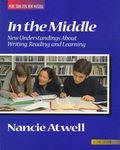
In The Middle by Nancie Atwell


Author: Nancie Atwell
Year written: 2nd Edition, 1998
Publisher: Boynton/Cook Publishers, Portsmouth, NH

Synopsis: I haven't read the whole text, but here's the gist of it: Provides a helpful description and outline for responsive teaching and shows ways for teachers to "turn classrooms into workshops where students and teachers create curriculums together." Has a very useful list of minilessons and contains rules for writing and reading workshops.

Rating of how well this literature addresses issues adolescents are dealing with—1 to 5 scale with 1 meaning the lit never addresses the issue and 5 meaning the lit addresses the issue throughout the book or article:
Identity: 5
Courage: 5
Change: 5
Responsibility: 5
Community: 5
Acceptance: 5
OVERALL “ISSUES” RATING (average of above scores): 5

Rating of overall quality of writing in the book or article—1 to 5 scale with 1 meaning low occurrence and 5 meaning high occurrence or prevalence:
Character Development (author does this throughout the literature): N/A
Readability (use of words, phrases, sentences and paragraphs in a way that communicates ideas clearly): 5
Presentation of ideas relating to theme(s) in new or thought provoking ways: 5
Elegance (use of interesting words, phrases, sentences and paragraphs to produce graceful, unobtrusive prose or poetry that will keep the reader’s attention and interest): N/A
OVERALL WRITING QUALITY RATING (average of above scores): 5

Likely Audience: Secondary school teachers, probably English/Language Arts teachers

Concerns regarding content & in consideration of a YA audience: N/A

Ways for teachers to share & students to extend: Great resource for minilessons (examples and instructions on how to teach them), reading and writing workshop outlines, material on evlauation, and also contains a list of essential books for students and teachers.

An Abundance of Katherines by John Green


Author: John Green
Year written: 2006
Publisher: Dutton Juvenile

Synopsis: Colin Singleton has just graduated from high school, is devastated over recently being dumped by his girlfriend, and decides to go on a road trip with his best buddy in order to take his mind off of all his stresses. Colin's road trip ends up turning into a journey of self-discovery...that sounds really cliche, because it is.

Rating of how well this literature addresses issues adolescents are dealing with—1 to 5 scale with 1 meaning the lit never addresses the issue and 5 meaning the lit addresses the issue throughout the book or article:
Identity: 5
Courage: 5
Change: 5
Responsibility: 5
Community: 3
Acceptance: 5
OVERALL “ISSUES” RATING (average of above scores): 4.6

Rating of overall quality of writing in the book or article—1 to 5 scale with 1 meaning low occurrence and 5 meaning high occurrence or prevalence:
Character Development (author does this throughout the literature): 2
Readability (use of words, phrases, sentences and paragraphs in a way that communicates ideas clearly): 5
Presentation of ideas relating to theme(s) in new or thought provoking ways: 2
Elegance (use of interesting words, phrases, sentences and paragraphs to produce graceful, unobtrusive prose or poetry that will keep the reader’s attention and interest): 2
OVERALL WRITING QUALITY RATING (average of above scores): 2.75

Likely Audience: High School, grades 9-12

Concerns regarding content & in consideration of a YA audience: language (mostly innuendo) is an issue - Author uses "Fug" and "Fugging" throughout the book; there are several sexual references and one sex scene described in the book.

Ways for teachers to share & students to extend: This novel's writing quality is low, but Colin's story does touch on many pertinent adolescent issues which may be transferred to authentic discussion relevant to the lives of most adolescents...although the author's treatment of the various adolescent issues featured in the story is cliche and unoriginal.

Godless by Pete Hautman


Author: Pete Hautman
Year written: 2005
Publisher: Simon Pulse

Synopsis: Jason is 16 years old and is bored and tired of adults telling him what do to all the time. He decides to create his own religion with his town's water tower as his "God." Jason's best buddy, Shin, joins this new religion along with a couple other peers from school. Much more than religion, this is a story about identity and figuring out one's place in the world.

Rating of how well this literature addresses issues adolescents are dealing with—1 to 5 scale with 1 meaning the lit never addresses the issue and 5 meaning the lit addresses the issue throughout the book or article:
Identity: 5
Courage: 5
Change: 5
Responsibility: 5
Community: 5
Acceptance: 5
OVERALL “ISSUES” RATING (average of above scores): 5

Rating of overall quality of writing in the book or article—1 to 5 scale with 1 meaning low occurrence and 5 meaning high occurrence or prevalence:
Character Development (author does this throughout the literature): 4
Readability (use of words, phrases, sentences and paragraphs in a way that communicates ideas clearly): 5
Presentation of ideas relating to theme(s) in new or thought provoking ways: 4
Elegance (use of interesting words, phrases, sentences and paragraphs to produce graceful, unobtrusive prose or poetry that will keep the reader’s attention and interest): 3
OVERALL WRITING QUALITY RATING (average of above scores): 4

Likely Audience: Junior High or High School, grades 7-11

Concerns regarding content & in consideration of a YA audience: No big concerns

Ways for teachers to share & students to extend: The author treats the main issue of identity very creatively in this story. The actions of the characters are true to real life which may lead to some great whole-class or small-group conversations in class as well as a great opportunity to request that students respond and reflect on the issue of identity through essay or vignette writing.